
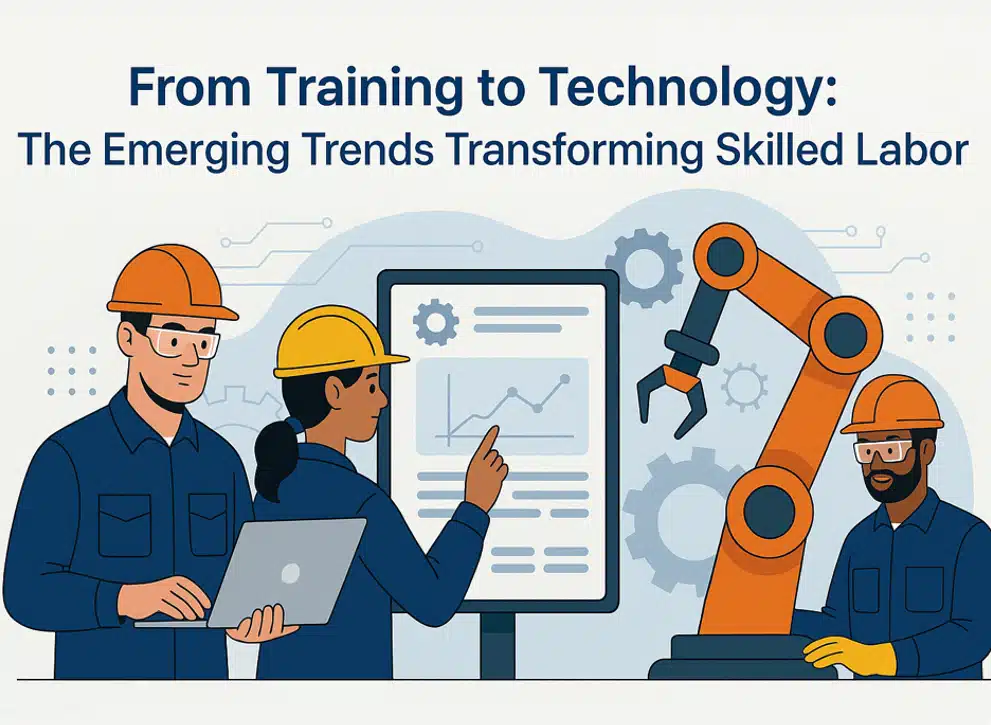
In today’s fast-changing economy, skilled labor is at the heart of innovation. From construction and manufacturing to energy and logistics, trades are evolving faster than ever. The driving forces? Emerging technologies and modern training innovations that are redefining what it means to be “skilled” in the workforce.
Whether you’re an employer struggling to fill critical roles or a worker looking to future-proof your career, understanding these trends is essential.
The New Era of Skilled Labor
The skilled trades are no longer limited to manual craftsmanship – they now integrate digital tools, automation, and data-driven systems. Workers are expected to operate smart machines, interpret data, and collaborate across hybrid environments.
Recent workforce research indicates that 92% of most jobs, including many skilled and trade roles, require digital skills, as employers increasingly rely on digital tools and connected technologies. This shift is reshaping training and hiring across industries.
Key Technologies Transforming Skilled Labor
Artificial Intelligence (AI) and Data Analytics
AI is optimizing scheduling, equipment maintenance, and quality control. Skilled tradespeople who can interpret AI-generated data are increasingly valuable to employers.
Augmented and Virtual Reality (AR/VR)
VR simulations let apprentices safely practice complex procedures in a controlled digital environment, while AR overlays help workers perform precision tasks on the jobsite.
Sustainable and Smart Materials
From self-healing concrete to advanced composites, sustainable materials are reshaping industries. Skilled laborers trained in eco-friendly techniques will be critical as the green economy expands.
Training Innovations Driving Workforce Development
Microlearning and Modular Training
Short, digital learning modules allow workers to upskill quickly – anytime, anywhere – keeping training relevant in a fast-paced industry.
Apprenticeships 2.0
Modern apprenticeship programs now blend hands-on experience with online coursework, enabling workers to gain certifications and in-demand skills simultaneously.
Industry-Education Partnerships
Collaboration between trade schools, employers, and industry associations ensures that training aligns with real-world technologies and hiring needs.
Credentialing and Lifelong Learning
The future of work demands continuous learning. Stackable credentials, short courses, and ongoing certification programs are key to career longevity.
What Employers Need to Know
- Invest in Employee Training: Build an internal culture of upskilling and support lifelong learning.
- Adopt New Tech Early: Modern equipment and software attract top-tier talent.
- Partner with Education Providers: Co-create apprenticeship or internship programs to secure future talent.
- Prioritize Soft Skills: Communication, adaptability, and leadership are just as vital as technical expertise.
What Workers Should Do to Stay Competitive
- Embrace Technology: Learn how automation and digital tools affect your trade.
- Keep Learning: Take advantage of online platforms and credentialing programs.
- Engage with Industry Networks: Join trade associations and training forums to stay informed.
- Show Adaptability: Demonstrate your ability to learn and evolve as new tools emerge.
The Bottom Line
The skilled labor force is entering a new chapter – one where technology and training go hand in hand.
Employers who invest in modern training will build stronger, more adaptable teams. Workers who pursue lifelong learning and digital fluency will enjoy greater job security and career growth.
In the end, success in the skilled trades isn’t just about mastering tools – it’s about mastering change. As the industry evolves, both workers and employers have opportunities to move forward with confidence.
The future of skilled labor is built together.
Join the WORKERS.COM Community today to connect with peers, share knowledge, and access resources that help you stay ahead in an ever-changing workforce.


